A Mate Told Me To Jump Out Of A Plane.

So I Did… 15 Times

What it’s really like to complete an AFF Skydiving Course

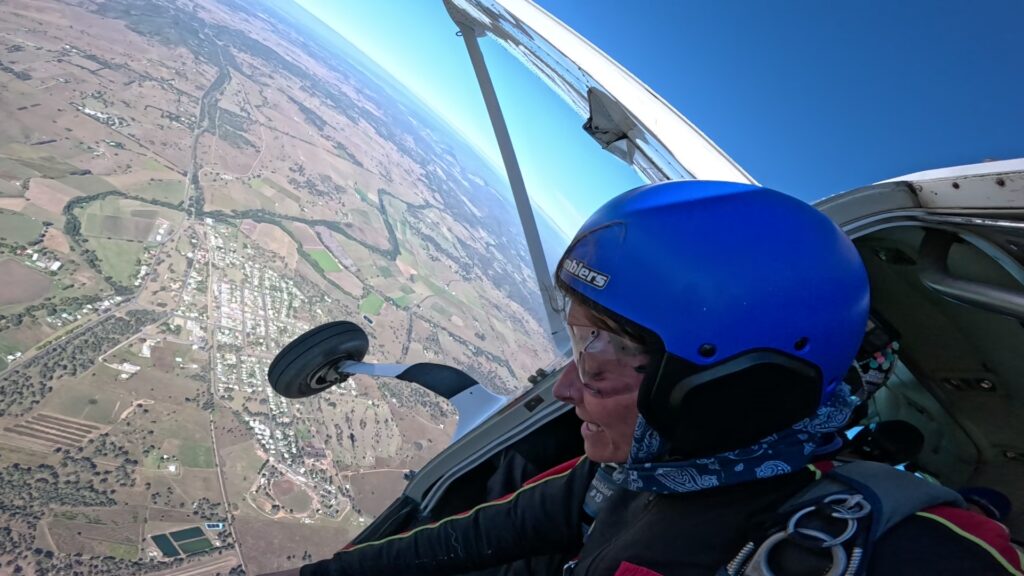
“How high are we?” Bec asked as we gained altitude. I glanced at my altimeter.

“6,000ft. I’ll be locking on and getting ready to deploy at 5,500ft!” I replied, happily recognising the altitude prompt from my training the previous day. I returned my gaze to the ground outside the Cessna Caravan, rapidly shrinking beneath us. I focused on breathing exercises to calm my nerves and mentally ran through the jump. 

My very first skydive.

Check in, check out, up, down and GO!

Remember to breathe…

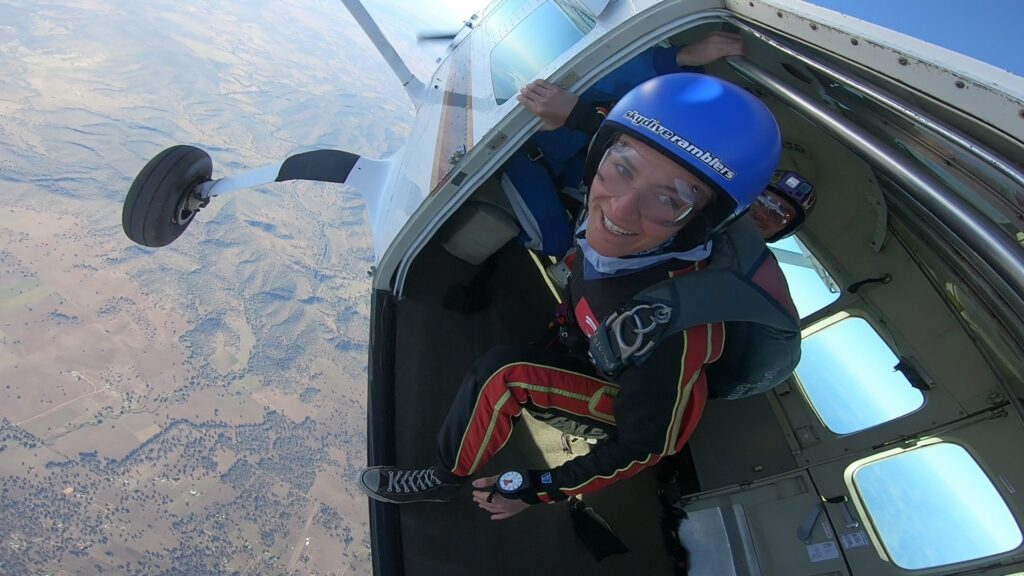
By 12,000ft, Shelby and Bec had checked my gear one final time, there was nothing left to do but jump. My altimeter ticked past 14,000ft. The plane climbed a little higher then slowed. After what felt like a long pause, the door opened. My heart rate spiked. The plane filled with thumping wind and rocked as other groups disappeared into the sky.

My mouth was dry, my body was caught somewhere between excitement and fear.

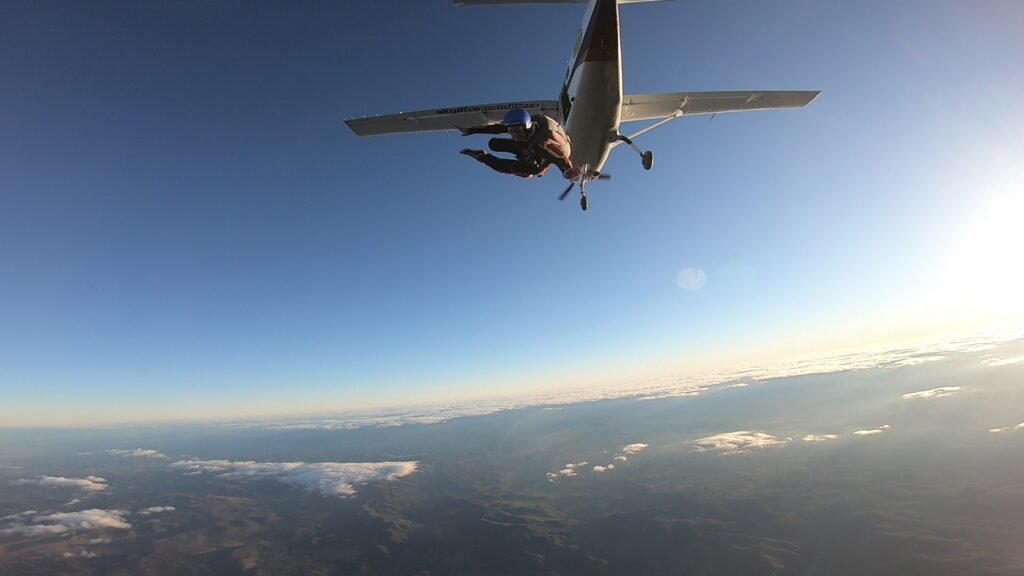
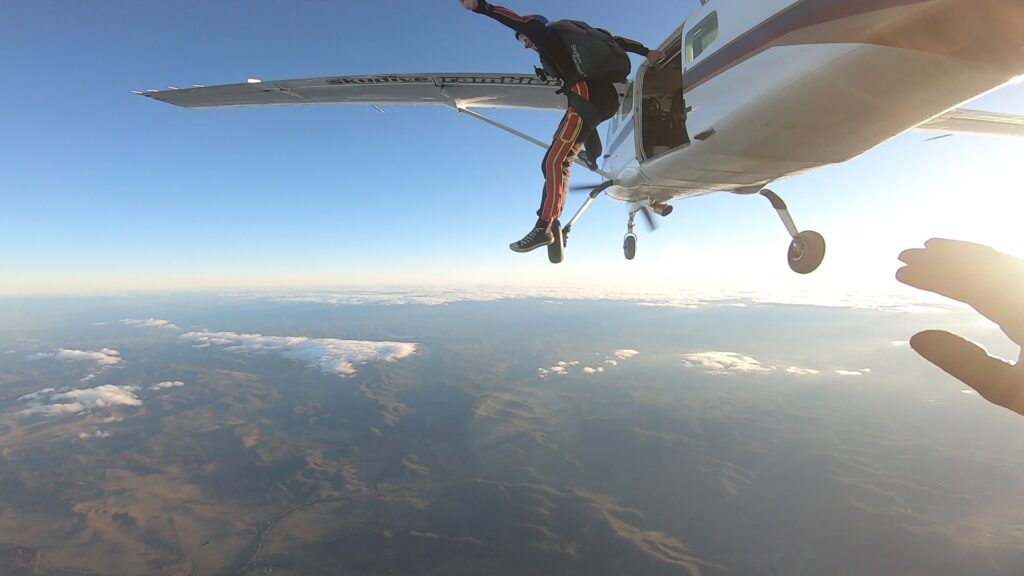
Bec positioned herself on the outside of the door while Shelby called me forward. I carefully but quickly moved into position, fighting the intense strength of the propeller wash as I set up in the doorway.

“CHECK IN!” I shouted, turning my head inside.

Shelby acknowledged with a big, calm smile, “OKAY”.

“CHECK OUT!”

Bec replied enthusiastically, “OKAY”.

I faced the wind.

“UP… DOWN…”

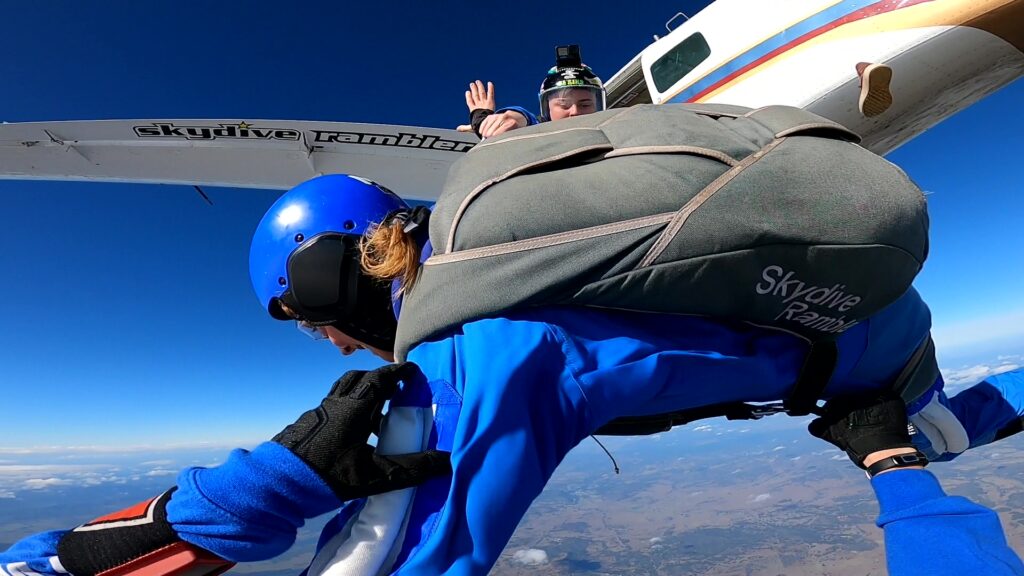
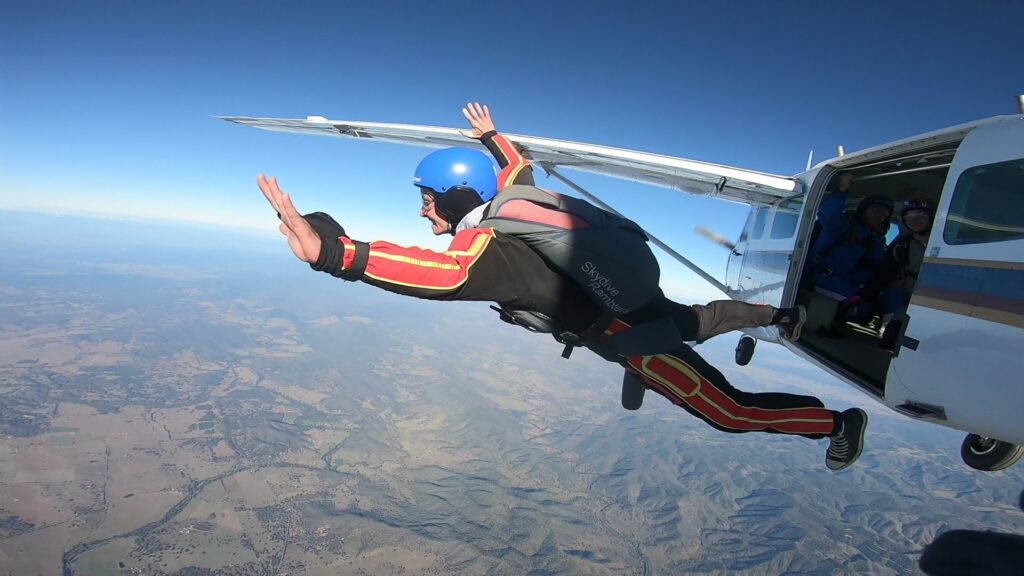
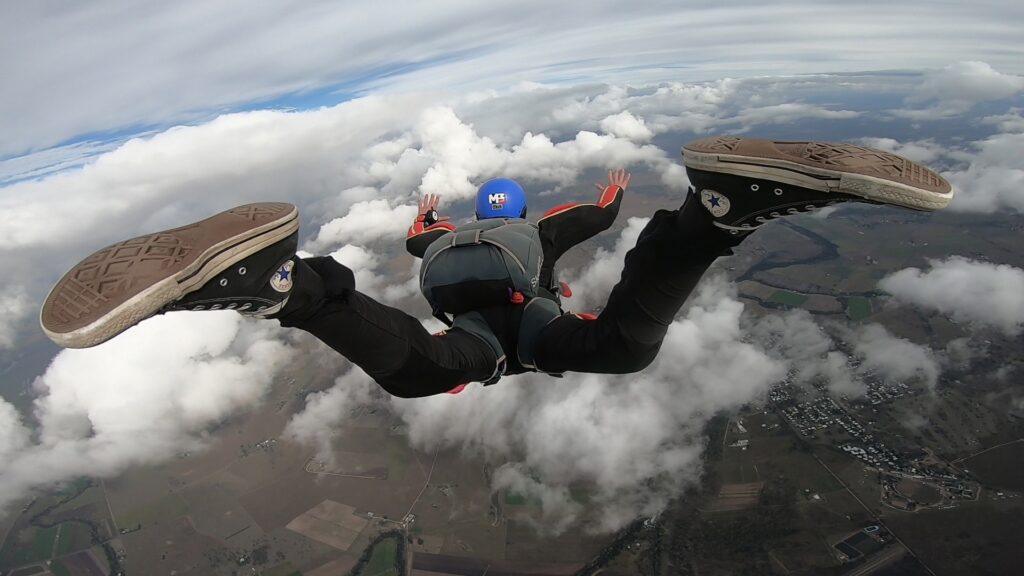
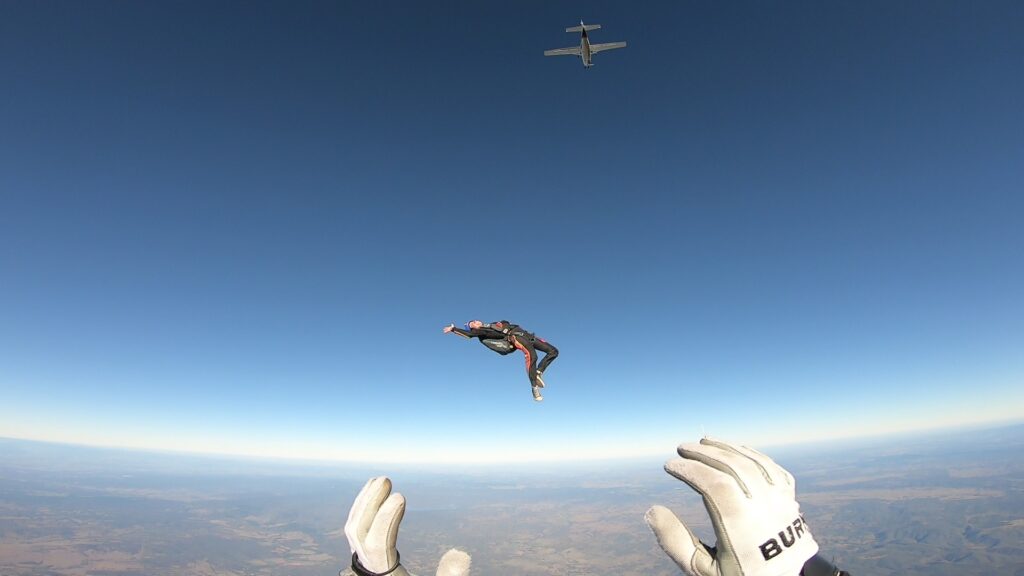
We left the plane. At that exact moment, my left shoe slipped clean off my foot.

“AHH, MY SHOE…”

We’ll come back to the missing shoe in a minute. First, let’s rewind to how I ended up jumping out of the plane in the first place.

It started with a mate…

I’ve always wanted to jump out of a perfectly good plane. However, with other expensive hobbies competing for my money and seasonal income, spending upwards of $400 on a tandem skydive wasn’t a priority.

That was, until I visited a mate in Tasmania last summer. I started asking my mate, Pete, about some old photos hanging on his wall. He fondly reminisced about the time his son completed an Accelerated Freefall (AFF) course many years ago.  As the conversation continued, I learnt Pete was a skydiver himself, and many of the buddies he’d jumped with decades earlier were still doing it!

Until then, I’d never really put much thought into skydiving as a sport or the community that comes with it. He said, “You’ve gotta get up there and do the course. You’ll fit right in, and you will love it.”

Just like that, the seed was planted.

Fast forward five months. I finished work and hit the road from Tasmania to Queensland. I’d booked myself into the 15-jump AFF package at Ramblers Skydiving in Toogoolowah, Queensland.

The course made a dent in my savings. But let’s be honest, skydiving isn’t exactly known for being a cheap hobby…

As I told others about my last-minute plan, most had the same response…

“Have you ever skydived before?”

“No…” I replied, trying to sound confident in my decision.

“Well, how do you know if you’re going to like it?”

A fair question.

Read more:
So what exactly had I signed up for?

I arrived at Ramblers Drop Zone the night before the course, hoping to familiarise myself with the property and get an early night. By 8am the following day, it was almost time to begin. People were arriving from all over, and the place started to come alive. There was a light and energetic buzz in the autumn air as old friends and new friends connected. 

Our group was called over to meet Paul, our instructor for the day. There were 8 of us. 6 were completing AFF for the first time, and 2 were refreshing their skills.

We were an extremely lively bunch, full of dominating personalities. Paul had his work cut out for him!

The training started with a familiarisation and explanation of the landing area. Of course that includes all the things you shouldn’t do, such as crossing the “beer line” without looking above and around you to see if there’s any parachutes coming in to land… The first thing that became apparent was that there are a lot of small mistakes which would lead to having to buy a carton for the bar. A classic system used to hold people accountable for minor slip ups while benefiting the community in a light-hearted way. Fuck around and find out… right? 

Thankfully, AFF students are exempt from these rules.

As we were standing at the beer line, we watched the first plane load of the day. To my already nervous surprise, the first jumper somehow ended up in a parachute malfunction and started spinning uncontrollably. 

“Maaate, you’re not going to fix that!!” the staff on the ground commented.

Only seconds later, we watched the parachute disconnect and float away with the high-altitude wind. The teeny tiny human dot began to freefall again before their reserve opened above them.

“How likely is it that’ll happen to us?” we asked as every student’s eyes turned to Paul.

In his calm manner and with a little smirk on his face, Paul explained that the student parachutes are a lot larger, slower and less prone to malfunctions than personal parachutes. Knowing it was not entirely impossible – I tried to relax – trusting that the beginner experience was designed to be, in Paul’s humorous words, “almost impossible to kill yourself”.

As an active, outdoorsy person (I’m sure most who learn to skydive are), we were ecstatic to learn that the theory day wasn’t only in the classroom. The day was broken up between in classroom PowerPoints and practical “mock-ups” outside. They had us jumping off logs and benches to practice our Parachute Landing Roll (PLR), and out of a mock up plane door.  

It was a LONG day between all the jokes, questions and of course the content we needed to cover. We finished the day by sitting in a mock up harness and performing the critical emergency “cut-away” procedures we’d already witnessed from the ground only hours before.

Due to high wind conditions, students weren’t permitted to jump that afternoon. We’d soon learn that waiting for a suitable weather window was simply part of skydiving… especially when learning. The Drop Zone staff were constantly checking the wind speed and watching the clouds, ready to get us in the air as soon as conditions allowed.

Thankfully, I’d planned for six days to complete the course and had flexibility to stay longer if needed.

Now… it’s time we jump back to where we left off on my first jump.

AFF1: The missing shoe

“AHH, MY SHOE…”

Feeling the shoe slip off distracted me, but I was quickly pulled back to the present when Shelby stuck two fingers in front of my face with the “straighten your legs” signal. Switching my brain back to the jump, I did as she asked, then reached behind me with my right hand, bringing my left hand in front of my face to counter the change in body position. I grabbed the monkey fist attached to my pilot chute, waited until Shelby gave my arm a shake, signalling me to continue onto the rest of the sequence.

Slow it down. Don’t rush it. Breathe.

Back to my freefall arch, then three more of the same practice touches. Slow and steady.

To my surprise, my altimeter was still at 9,000ft. Okay, what’s next…

Horizon. Ground. Alti. Repeat.

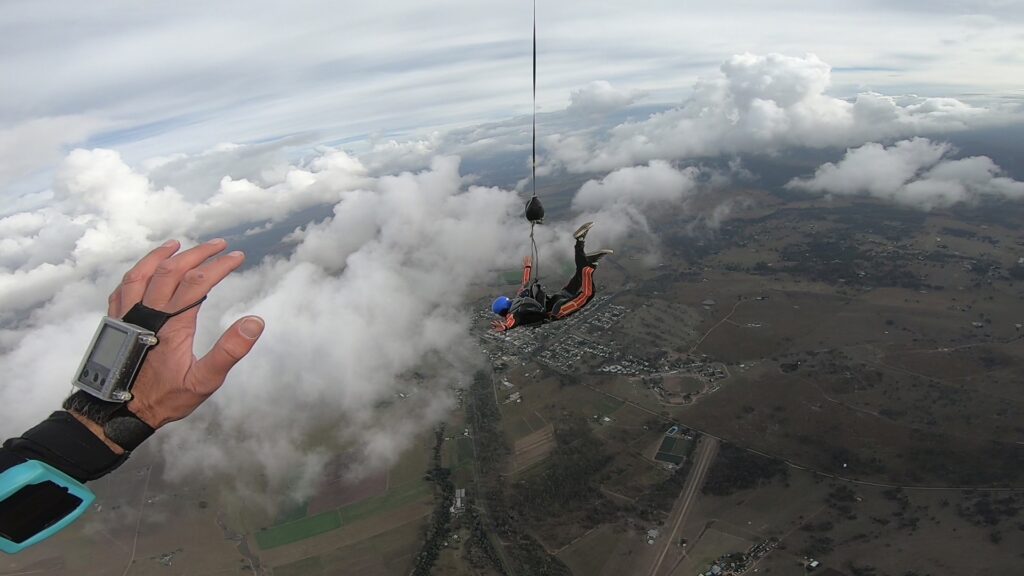
6,000ft. I locked on to my altimeter, watching the needle rapidly drop through the numbers.

5,500 ft. Don’t hesitate.

I gave them a big ol’ wave, signalling I was ready to deploy – perhaps somewhat aggressively after re-watching the video. I reached behind me one more time, grabbed the same monkey fist, and threw it with intent.

Bec and Shelby let go.

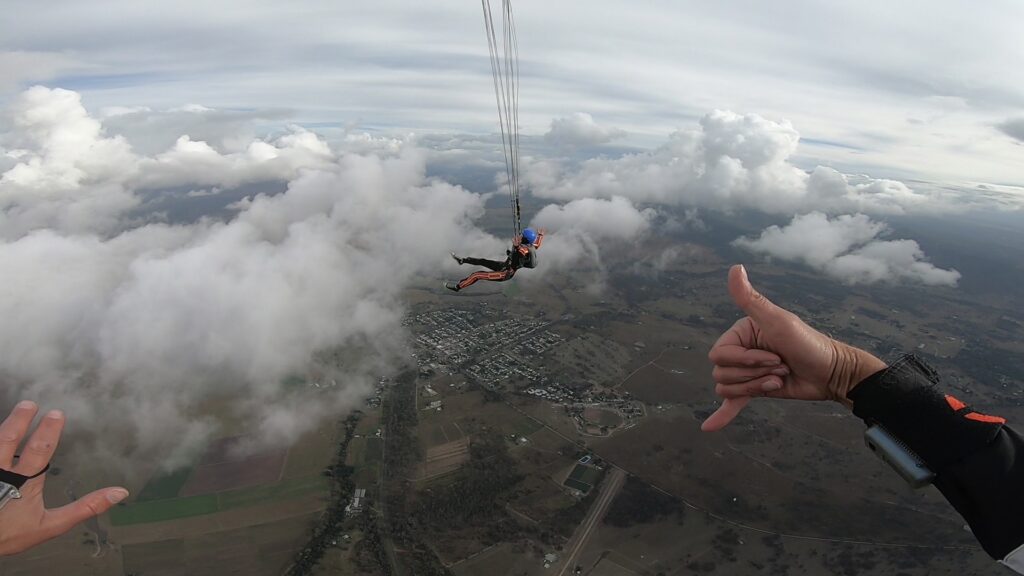
The parachute and harness began to catch me. The noise it made really took me by surprise. It rustled open. I looked up to witness the beauty of the parachute canopy just catching the last bit of air it needed to open completely.

All I could think was, “Okay, great, it’s above me. I’m in the air, and the parachute is above me… hang on. I’m ALONE in the air with a parachute above me. I still need to land this.”

My mind was racing as I tried to recall all the things I needed to check.

 Is it flying straight? Is the canopy the right shape and size?

“Yep, I think so.”

Is the slider all the way down?

“Yep. What’s next? The T’s.”

Any twists?

“No.”

Toggles.

 I grabbed the toggles and pulled them away from where they’d been stowed.

Two full flares….

“Geez, I really hope I checked that properly…”

I pulled both toggles down to below my bum and lifted them again slowly. That’s when everything started to slow down. The flapping noise of the canopy softened when the toggles were pulled down, allowing my mind a moment of calm.

Looking at the ground, still 4,000ft or so below me, I realised I had no idea where I was.

I finished the second full flare and promptly began looking for the landing zone.

“It’s between a big town and a small town. Look for the big town.”

I could see a town, but all towns in country Australia look pretty small from the air. I didn’t know if it was the big or small town. But I could see one, so that was a good start.

On the way up, Shelby had said, “If you can’t find the drop zone, don’t fly off into the distance, just do a slow right turn until you find it.”

So I did, and I found another significantly smaller town.

“Good. Big town. Small town, so the drop zone must be… THERE!”

I was overjoyed. A small but significant relief.

Okay, time to fly towards my holding area. WOW! THIS IS COOL! But focus, Raelee.

All this time I’d been anticipating that my radio would start talking to me – that my ground assistant would give me instructions. When I didn’t hear anything through all of that, I panicked. 

Oh shit, the radio isn’t working. Oh shit, I’m going to have to do this all by myself. If the radio doesn’t work, I need to look for and follow the white arrow.

As I scanned below for the white arrow, I heard, “Hey Rae, great jump. This is your radio check…”

I exhaled a long, slow breath of joyful relief.

“…if you can hear me, give me two full flares”

It was Dave McEvoy.

I followed his instructions like a shadow to its master, until it was time to land. Because I am a lightweight human, my canopy kept me up high for longer than most. As I flew in for my final leg of the landing pattern, McEvoy instructed me to bring my feet together and prepare for landing.

Well, there’s no shoe on my left foot, so I guess I should lead the roll with my right . 

I landed without needing to roll. It was a textbook landing, thanks to McEvoy’s expertise.

I packaged my rig into a messy bundle, held it tight and exited the landing area with an adrenaline-fuelled grin.

In the training room, Shelby and I talked through the jump and watched the video.

“I wonder if we got it on film?” She said, “Maybe your shoe stayed in the door of the plane!”

With detective eyes, we watched both points of view. There it was! 

For a split second in the top-right corner, we laughed as the shoe became geographically misplaced. There was almost no chance I’d ever see it again.

I see myself scream. Shelby and Bec laughed at each other, thinking I screamed out of fear, neither of them realising my shoe was gone until we spoke again on the ground. Which bodes well for where their attention was directed.

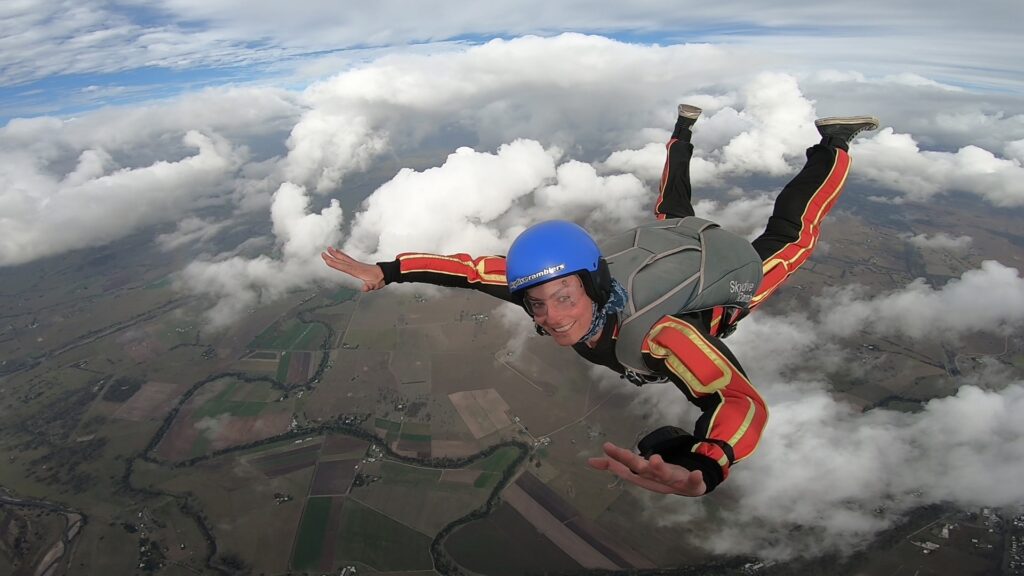
“You’ve gotta get up there and do the course. You’ll fit right in, and you will love it!” – Pete
Starting to understand

I appreciate how Ramblers varied the instructor/student pairings during the first few jumps. It gave students the opportunity to learn from a wealth of combined experience, with each instructor offering unique perspectives, feedback and tips.

I felt a lot more comfortable going into my second jump with Robin and Nicole, albeit still nervous once we were in the plane. 

Breathe…

As we exited the plane, I was so focused on Shelby’s feedback about improving my arch that once I got into a stable position, I just stayed there.

Robin tried to prompt me more than three times to begin the freefall learning sequence. One strong shake on my arm finally snapped me out of my blank brain. I’m sure he was only one shake away from a smack on the head to wake me up.

Each jump progressed through new movements, while also allowing me the chance to refine ones I’d already learnt. By my third jump, one instructor let go in freefall, and I completed my first turns. Things had started to feel different. I felt like I was getting the hang of it.

That didn’t last very long.

Hang on…

Following a forced break due to rainy days, I was nervous that I’d forget things that were starting to feel more natural. When the weather allowed for AFF4, it was time to drop down to only one instructor, Toddy. He would be my only instructor for the remaining four training jumps and quickly became one of my favourite people at the DZ. His magnetic smile could ease the nerves in an instant – even at terminal velocity.

The set up in the door already felt more intimidating without another person on the outside of the plane. Just a wide-open space 14,000ft above the earth. Toddy and I left the plane.

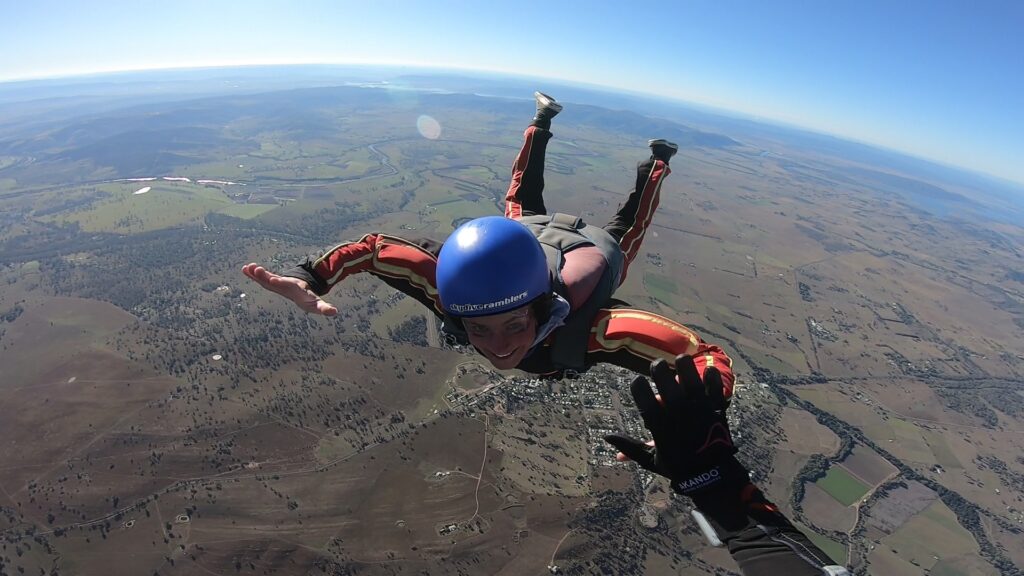
Once we were stable, I checked my body position with Toddy. Thumbs up all around.

Still holding onto me, he made his way around so we were face-to-face, then let go.

I immediately and unintentionally started turning to the left.

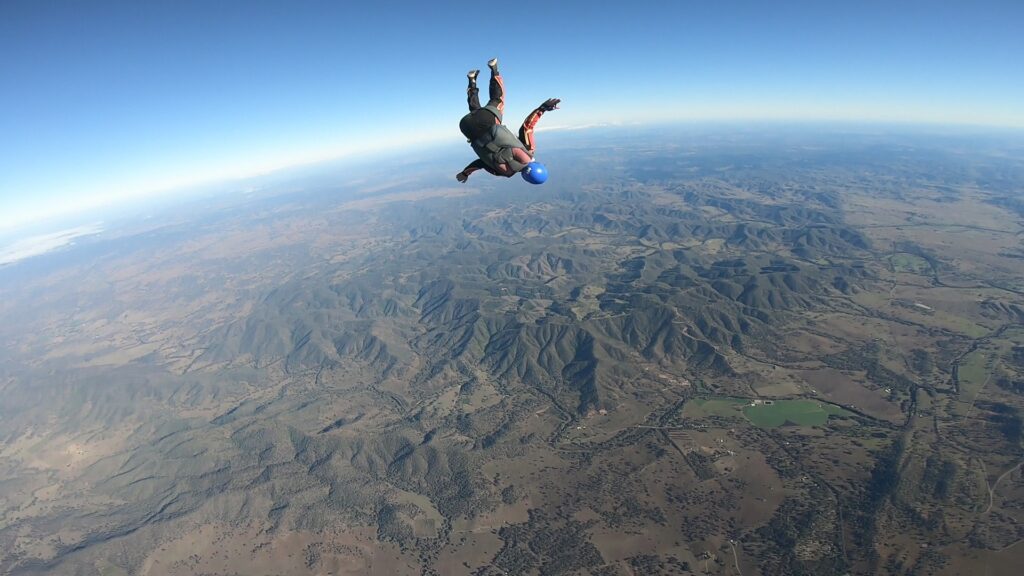
I stopped the turn when Toddy came back into view, then did a right-hand spin. I stopped that, only to immediately enter a slow left-hand “helicopter spin” – essentially, this is what happens when asymmetry turns the body into a human spinning top. It can be disorienting and is less than ideal.

We continued falling towards 5,500ft. To the credit of my bad form, I deployed my parachute with my left arm stretched out in front of me, which was not what we’d been taught to do.

With complete beginner’s luck, whatever I had done was enough to stabilise the spin, and my deployment was smooth.

Back in the training room, we reviewed the video to see where it had gone wrong. Toddy hit pause at a very unflattering angle – looking directly between my spread-open legs. He pointed at the rig, which had shifted to the left, throwing off my centre of gravity.

From then on, he decided that I needed to wear an additional strap on my harness, known as a “belly-band”, to prevent this from happening again.

By AFF5, I was feeling more confident, but once again my downfall was turning. I felt quite an achievement simply being able to focus on what I had to do, even though I couldn’t do it. 

I was no longer getting caught in sensory overload during freefall. Don’t get me wrong, I was still nervous. However, instead of my brain desperately trying to recall the sequence, I was starting to focus on the specific movements required to complete it.

So, although I nailed the left-hand turn, I tried – to my own detriment – to turn right.

I could not.

I just did it, why is it not working?

I tried desperately to figure it out, instead of recalling the training and doing what I’d been taught… it didn’t work.

Humbled and a little upset, I made my way back to the training room. Toddy’s gentleness and constructive feedback picked my spirits back up and helped wrap them in a little blanket of self-grace.

You’re still learning. One week ago you’d never even skydived before. Chill.

Backflips, potato chips and panic

I’d love to tell you that after all these ‘learning opportunities’ that I nailed my first unlinked  exit… but the footage says otherwise.

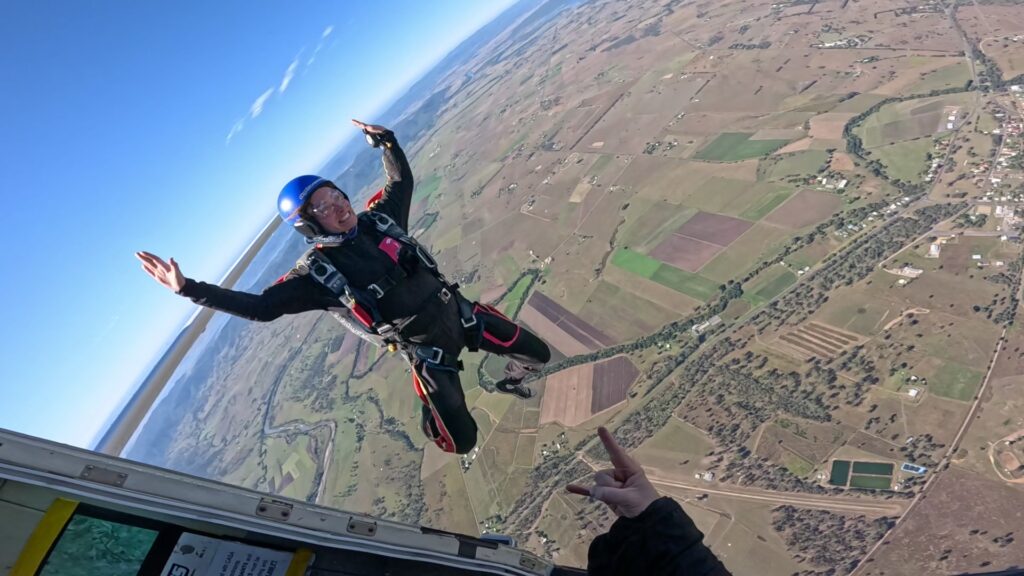
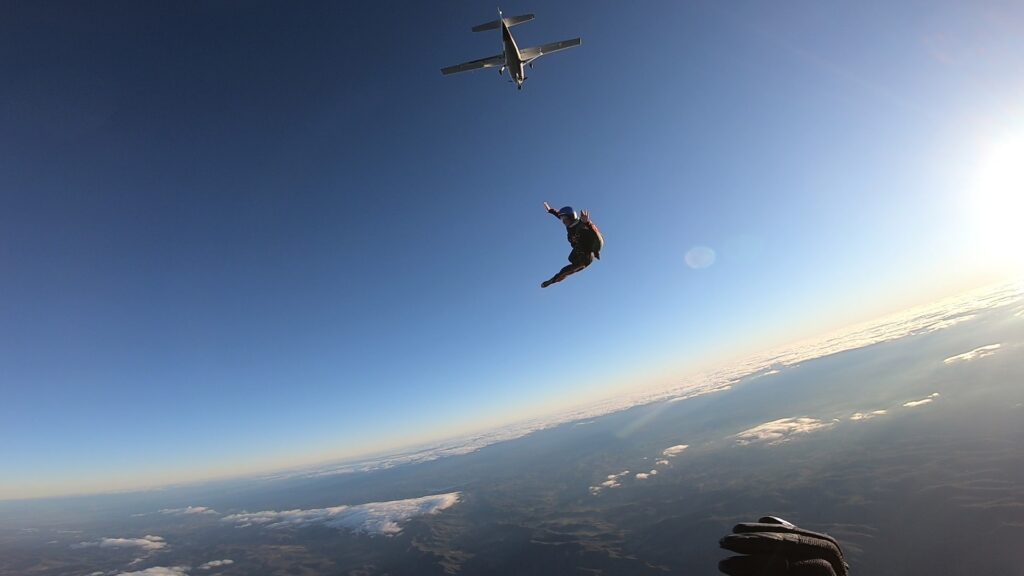
Toddy and I exited the plane simultaneously, but only one of us tumbled.

Even after I defaulted into a hard arch and got myself stable, I was floating back and forth like a rigid potato chip.

Thankfully, the rest of the jump actually went really well. By the time I was on the ground, I had a grin from ear to ear, knowing that Toddy’s recording was going to be a knee slapper!

The following two jumps were similar. Although my next two exits were more stable than AFF6 – admittedly, a pretty low bar – I still ended up with plenty of opportunities to practice self-recovery in freefall.

AFF7 involved learning to backflip. The point of the exercise wasn’t actually about perfecting the flip, but to deliberately become unstable, to allow Toddy to assess my ability to recover and get stable again.

This was one of my favourite jumps without question.

I loved the challenge of deliberately forcing my body into instability when I’d just spent the previous six jumps working on control, stability and improving technique.

So when I found myself wondering why I was looking at the sky rather than the horizon on my 8th jump, it didn’t feel quite so scary. Instead, I got to use my new skills to get myself stable… once again.

No instructor. No radio. Just me.

The dreaded AFF9. 

I was nervous about this one right from the first day. The final assessed jump of the course, but with two big differences.

One: The exit height is 5,500ft, as opposed to the previous 14,000ft jumps.

Two. You’re completely alone. No instructor. No radio.

So yes, I was dreading it.

Exit at low altitude, pop the parachute as soon as you’re stable, then land. 

Simple, right?

It’s known as a Hop ‘n Pop. Despite the anxiety I’d built up, it went really well. Much better than I could have expected! I almost nailed the landing too, but as my feet touched the grass, I was pulled backwards and fell once again.

When my feet (and butt) were firmly back on the grass, I took a moment to mentally congratulate myself. 

Trying to contain the parachute bundle from exploding from my arms, as I walked away from the landing zone once again, I was beyond proud of myself.

Everyone was congratulating me. I put a carton on the bar simply to thank everyone for their support and for welcoming me so wholeheartedly into their community.

But my experience wasn’t over yet.

Learning to fly

I still had six jumps remaining on my package, and required additional accuracy landings to qualify for the A-Licence. I manifested myself onto the next plane, headed back up to 14,000ft and, for five of my final six jumps, stepped out of the plane completely solo.

The most noticeable difference between jumping with an instructor and your first few solo jumps is the time in freefall.

All along, everyone had been telling me that a minute of freefall was heaps of time.

Turns out… they’re right.

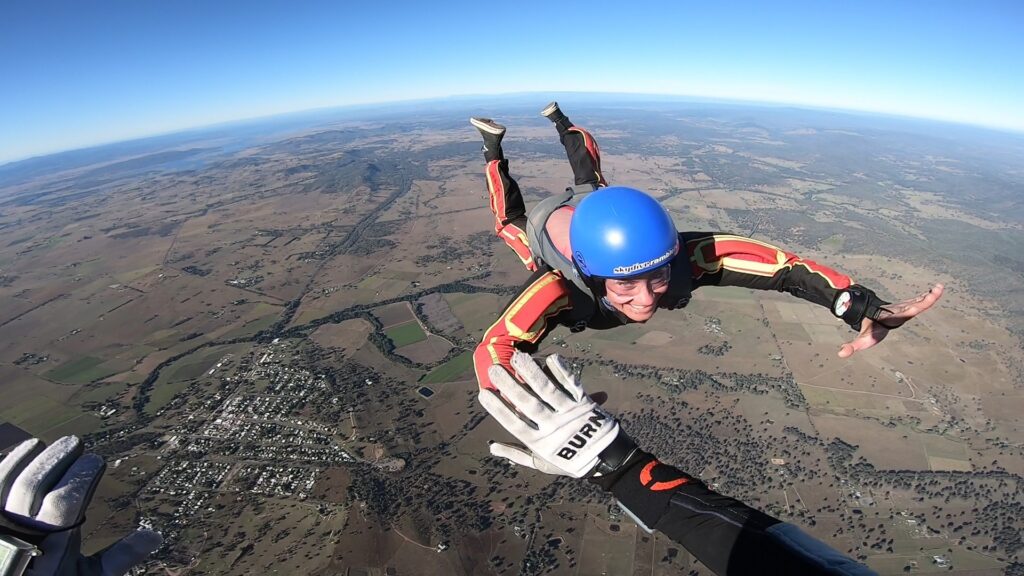
Without an instructor to watch and respond to, there was suddenly so much more time – or so it felt. I would practice turns, work on my body position, or simply enjoy being in the sky. 

For the first time, I wasn’t desperately trying to remember or follow what came next.

I could finally be fully present in freefall.

I could actually feel it.

I could hear it.

Learning to laugh at failure

“Want to do a two-way belly?”

Shelby and I had become friends since our first jump together. Her instructing style was thorough and easy to understand. I found her to be a valuable teacher throughout my journey. 

She became someone I really looked up to.

So when she asked if I wanted to do a fun jump with her, I’ll be honest – I was a little star struck. And, naturally, felt the need to do well.

We talked through what we’d be doing on the ground, including a new style of exit from the plane. It sounded simple enough.

The jump didn’t quite go to plan. I ended up way above Shelby rather than flying alongside her. I’d be lying if I said I was trying to fix the problem. When I found myself flying above her, all I could think was, “damn, she’s cool.” 

I knew where I was

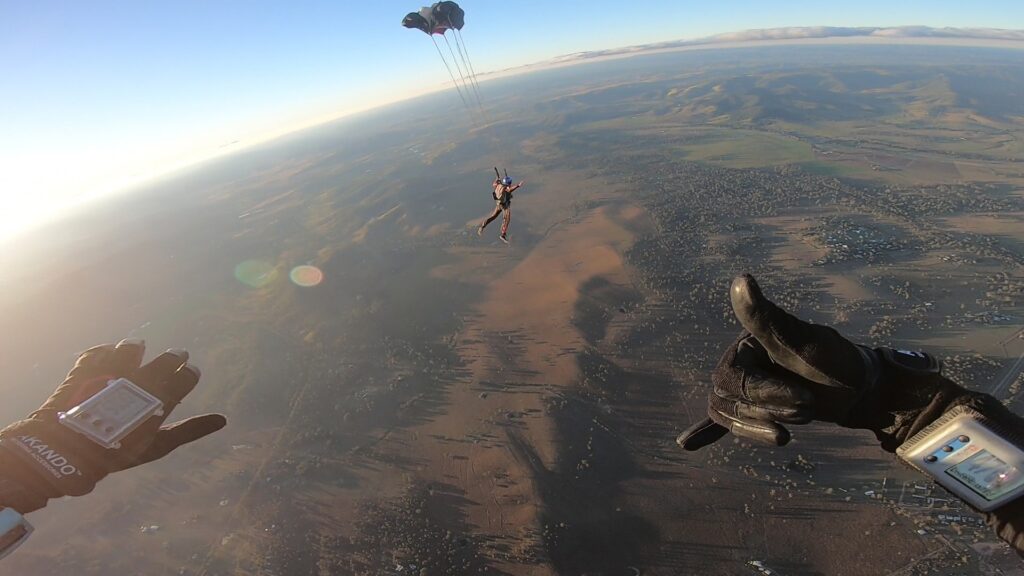
For my fifteenth and final jump, I decided I’d just enjoy the view.

I watched the hills below in the pre-dusk light and noticed how familiar I’d become with the Drop Zone, now easily identifiable.

I thought back to my first jump, when I’d been desperately searching for the “big town” and “small town”, trying to work out where I was supposed to land. Now, I could pick out the Drop Zone without hesitation.

I felt a shiver of pride that choked me up a little, knowing this would be my last jump for the foreseeable future. As much as I wanted to continue learning and progressing, the same constraints that had stopped me from skydiving in the first place meant it was time to pause my skydiving journey.

Pete was right…

I arrived at Ramblers Drop Zone to learn a new sport, get my A-licence (tick!) and throw myself outside of my comfort zone. What I left with was a collection of difficult bye-for-now’s and the understanding that when Pete had said I would love it, he wasn’t just talking about skydiving. He was talking about the people, the community at the drop zone and the learning process that, for me, had just begun.

In classic outdoor community style, the more people you meet, the fewer degrees of separation you seem to find.

Ellen, a kindred spirit, and I bonded during my time at Ramblers. One day, she introduced me to her dad when he dropped in for a few jumps. We discovered that Ellen’s dad and Pete knew each other back in the day.

When Pete had told me about his buddies, I expected to meet McEvoy. After all, he owns the Drop Zone. What I didn’t expect was him to still be so actively involved, or for him to be the person guiding me through the landing on my very first jump. 

It felt like one of those full-circle moments.

Thousands of kilometres from where it all began in Tasmania, it was another reminder that I hadn’t simply found a sport. I’d stumbled into a community that had been connecting people for decades. 

Another key member of this community was Sara. She kept the place running like a well-oiled machine. When I thanked her for everything she’d done during my time there, she shrugged it off.

“I didn’t do anything.”

But she did.

There’s a lot that happens behind the scenes at a drop zone. The organising, the checking, the managing of all the little things that keep everything moving. Sara was one of the people making it happen.

It takes an exceptional management team to create an environment people want to return to.

And I do want to come back.

Somewhere along the way, skydiving stopped being something I was trying to learn and became something I knew I wasn’t finished with.

I’ll be back. 

I just don’t know when.

I came to get my A-Licence. I left understanding why people keep coming back.

You might also like…

Fill out this field
Please enter a valid email address.
Fill out this field

Leave a Reply

Your email address will not be published. Required fields are marked *

Fill out this field
Fill out this field
Please enter a valid email address.
You need to agree with the terms to proceed